
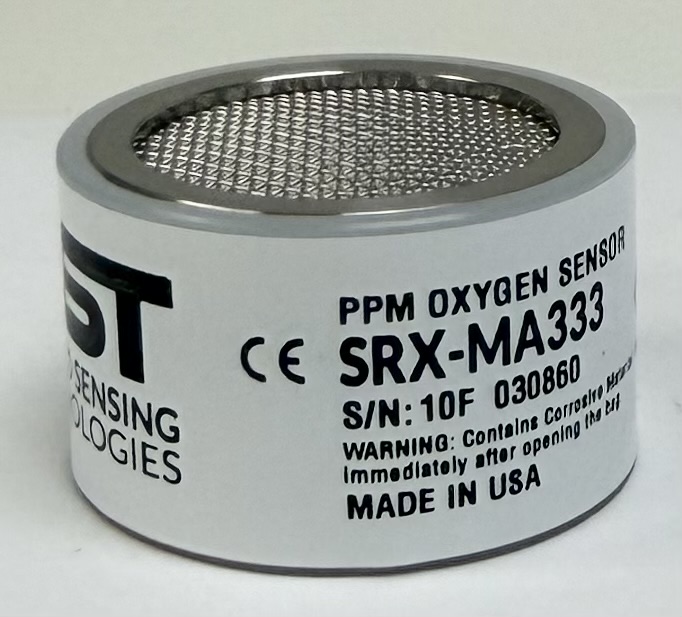
PPM O2 Sensor – A Modern Era Invention
The term Parts Per Million – PPM O2 Sensor is usually linked with high-resolution digital display accurate to fraction of a PPM when measuring oxygen concentration in a gas mixture. Such high-accurate measurement is possible only with sensors that are exceptionally sensitive and are unaffected by minor variations in ambient conditions.
Electrochemical Oxygen Sensors: Working Principle, Types, and Applications
Electrochemical oxygen sensors are widely used for accurate oxygen measurement in industrial, medical, and environmental applications. These sensors offer fast response, high reliability, and low maintenance, making them ideal for both trace oxygen (PPM) and percent oxygen measurements.
How Electrochemical Oxygen Sensors Work (Principle of Operation)
Electrochemical oxygen sensors operate on the galvanic fuel cell principle. When oxygen enters the sensor, it reacts with the electrodes and generates an electrical current.
This current is directly proportional to oxygen concentration, which allows precise measurement of oxygen levels in gas streams.
Unlike other sensor technologies, these sensors are self-powered. They generate their own signal without requiring an external power source. As a result, they are highly efficient and easy to use in portable and fixed systems.
Key Features of Electrochemical Oxygen Sensors
-
Self-powered operation (no external excitation required)
-
Direct and continuous oxygen measurement
-
Fast response time (6–30 seconds)
-
Wide measurement range (0.01 PPM to 100% oxygen)
-
Low maintenance and long service life
-
Stable output with minimal signal drift
Types of Oxygen Sensors
1. Percent Oxygen Sensors (% O2 Sensors)
Percent oxygen sensors are designed for higher oxygen concentrations.
-
Measurement range: 0–25% or up to 100% oxygen
-
Typical applications: combustion control, medical oxygen, safety monitoring
2. Trace Oxygen Sensors (PPM O2 Sensors)
PPM O2 sensors are designed for low-level oxygen detection.
-
Measurement range: 0.01 PPM to 1000 PPM
-
High sensitivity for trace oxygen analysis
-
Used in inert gas systems and high-purity applications
Oxygen Sensor Measurement Range
Electrochemical ppm o2 sensor provide as broad detection range, including:
-
Ultra-low levels: 0.01 PPM (10 PPB)
-
Trace levels: 0–1000 PPM
-
Percent levels: 0–25% and up to 100% oxygen
Selecting the correct sensor type ensures optimal accuracy and longer sensor life.
PPM Oxygen Sensor Specifications
Typical specifications of PPM oxygen sensors include:
-
Technology: Micro fuel cell electrochemical sensor
-
Response time (T90): 6–30 seconds
-
Operating temperature: 0°C to 50°C
-
Storage temperature: 0°C to 45°C
-
Expected lifespan: 10–24 months
With proper signal processing, these sensors can detect oxygen down to 0.01 PPM (10 PPB).
Applications of Oxygen Sensors
Electrochemical oxygen sensors are used in a wide range of industries:
-
Industrial gas processing and monitoring
-
Glove boxes and inert gas environments
-
Medical and healthcare equipment
-
Food and beverage packaging
-
Automotive and emissions systems
-
Diving and life-support systems
Their compact design and adaptability make them suitable for both portable and fixed installations.
Gas Compatibility of Oxygen Sensors
Standard oxygen sensors use KOH electrolyte and are compatible with:
-
Nitrogen (N₂)
-
Argon (Ar)
-
Helium (He)
-
Hydrogen (H₂)
-
Hydrocarbon gases
For gas streams containing CO₂ or reactive gases, sensors with acid-based electrolytes are recommended for improved performance and durability.
Factors Affecting Oxygen Sensor Performance
1. Temperature
Temperature significantly affects sensor performance, especially at low PPM levels.
-
Higher temperatures increase reaction rates
-
Sensor life decreases above 35°C
2. Sensor Life
Electrochemical sensors consume internal reactants over time.
-
Typical lifespan: 1 to 3 years
-
Depends on oxygen exposure, temperature, and environment
3. Calibration
Regular calibration ensures accurate readings.
-
Perform periodic span calibration
-
Use certified calibration gases
-
Increase calibration frequency in dynamic environments
Advantages of Electrochemical Oxygen Sensors
-
High accuracy and repeatability
-
Wide measurement range (PPM to 100%)
-
Low power requirements
-
Minimal maintenance
-
Reliable performance in various environments
Conclusion
Electrochemical oxygen sensors provide a cost-effective and reliable solution for oxygen measurement across multiple industries. By selecting the right sensor type and maintaining proper operating conditions, users can achieve accurate results, extended sensor life, and optimal performance.


Leave a Reply