
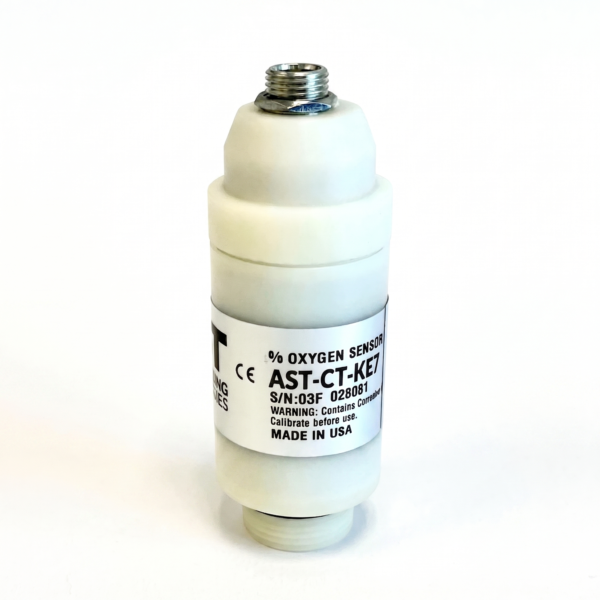
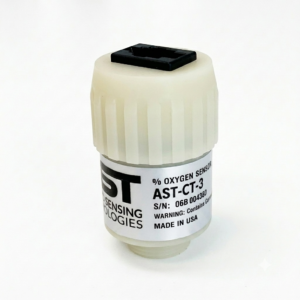
Product imagery shown for reference. Confirm the exact configuration before ordering.
AST-CT-KE7 O2 Sensor - Replaces PSR-11-75-KE7
AST Model SRX-CT-KE7 O2 sensor is designed for respiratory gas analysis and is a drop-in replacement to Maxtec 250 and AII model PSR-11-75KE7. This sensor uses a super activated with unique geometry anode that shows excellent stability, linearity and accuracy. SRX-CT-KE7 oxygen sensor offers excellent stability even under…
Technical information
Product details
Technical overview
AST Model SRX-CT-KE7 O2 sensor is designed for respiratory gas analysis and is a drop-in replacement to Maxtec 250 and AII model PSR-11-75KE7. This sensor uses a super activated with unique geometry anode that shows excellent stability, linearity and accuracy. SRX-CT-KE7 oxygen sensor offers excellent stability even under varying ambient conditions. SRX-CT-KE7 O2 sensor, among other analyzers, is used in Maxtec -OM-25A. Its innovative design with proprietary Pb anode structure provides with excellent stability and ensures full utilization of the anode without signal drift. This feature minimizing frequent calibration requirement. Sensor is designed, developed and manufactured in the USA.
Applications and guidance
Advanced Sensor Technology
The AST-CT-KE7 O2 Sensor is specifically designed for respiratory gas analysis applications. It utilizes galvanic micro fuel cell technology to deliver accurate, stable, and reliable oxygen measurements.
Moreover, the AST-CT-KE7 O2 sensor serves as a direct drop-in replacement for Maxtec 250 and AII Model PSR-11-75-KE7 sensors. As a result, users can integrate it easily into existing systems without requiring modifications. In addition, the sensor is widely used in analyzers such as the Maxtec OM-25A.
The sensor features a super-activated anode with a unique geometry, which enhances linearity, accuracy, and overall stability. Furthermore, its proprietary lead (Pb) anode structure ensures maximum anode utilization while minimizing signal drift. Consequently, the sensor maintains excellent performance even under varying ambient conditions and reduces the need for frequent calibration.
Furthermore, AST subjects every sensor to rigorous validation procedures, including output verification and 24-hour stability testing. Consequently, each unit meets strict performance and reliability standards prior to deployment.
To ensure reliability, AST tests each AST-CT-KE7 oxygen sensor for gas leakage rate at 30 inches of water column pressure. As a result, every unit meets strict quality and performance standards prior to use.
CAUTION:
- Users must verify compatibility with their intended equipment before installation.
- Although the sensor offers enhanced stability, users should calibrate it before use and again after 8 hours of continuous operation.
- Always follow the instructions in the owner’s manual of the intended analyzer for proper calibration procedures
It is important to note that this class of sensor does not currently have FDA approval; however, an application for FDA Premarket Notification remains under review.
Finally, AST designs, develops, and manufactures its sensors in the United States, thereby ensuring high standards of quality, consistency, and reliability.
AST Model SRX-CT-4 replaces
- Maxtec MAX-250
- AII PSR-11-75-KE7
Specifications and compatibility references
Explore alternatives
Related products
Application support
Not sure this is the right sensor?
Send the existing sensor or analyzer model and AST will help confirm the correct replacement.
